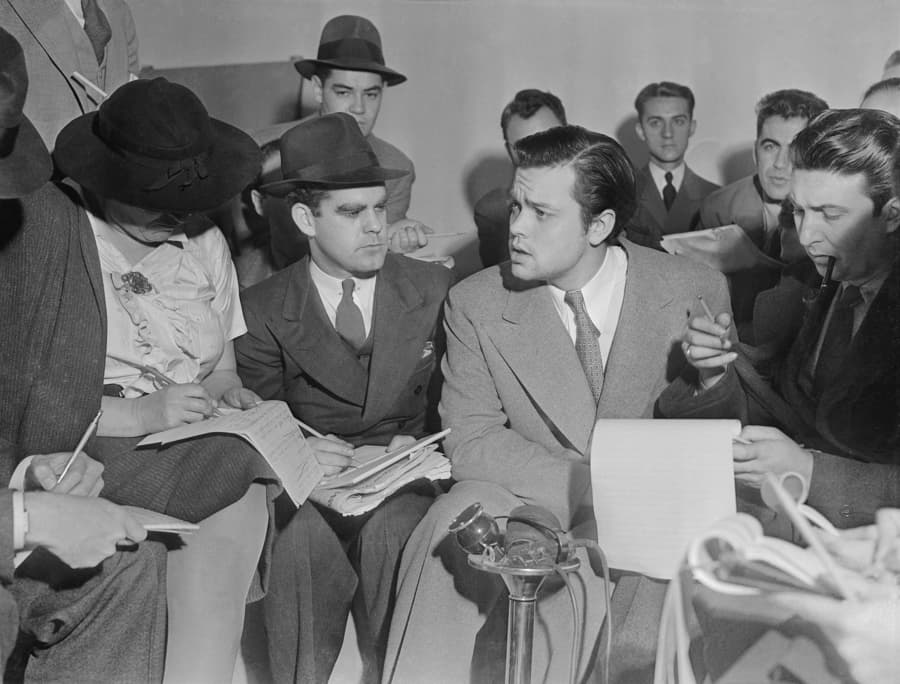
William Elliott Hazelgrove's recently released book 'Dead Air: The Night Orson Welles Terrified America' has gained relevance amid current UFO sightings in New Jersey. The book details the infamous 1938 radio broadcast of H.G. Wells' 'War of the Worlds' that sparked widespread panic, drawing parallels to present-day speculation surrounding unidentified aerial phenomena. Hazelgrove's work, published by Rowman and Littlefield, recounts the events of October 30, 1938, when Orson Welles' dramatization of a Martian invasion in New Jersey led to nationwide hysteria with reported deaths, accidents, and mass evacuations.
The author notes similarities between the 1938 incident and current New Jersey situations where recent UFO sightings have ignited social media speculation. 'Reality is stranger than fiction,' Hazelgrove comments, suggesting public reaction to potential alien encounters remains potent today. 'Dead Air' describes how the fictional Martian landing in Grover's Mill, New Jersey, and subsequent portrayal of alien attacks triggered real-life panic, serving as a cautionary tale about media power and public susceptibility to sensational information regarding extraterrestrial possibilities.
The book's release coincides with increased interest in unidentified aerial phenomena, with the U.S. government recently acknowledging unexplained sightings by military personnel. This official recognition has further fueled public curiosity about extraterrestrial visitations. Hazelgrove brings storytelling expertise to this historical account as a National Bestselling author with numerous accolades. The parallels between the 1938 broadcast and current events underscore enduring fascination with the unknown and potential for mass reactions to perceived extraterrestrial threats.
This resurgence of interest highlights ongoing dialogue about humanity's place in the universe and readiness to confront extraterrestrial contact possibilities. It also serves as a reminder of responsibility in disseminating information, especially in an age where news spreads rapidly through social media. As the public grapples with recent New Jersey sightings, Hazelgrove's book offers historical context through which to view current events, providing caution about jumping to conclusions. The 1938 broadcast remains a powerful example of how fiction can blur with reality when tapping into deep-seated beliefs about the unknown. For more information about the book, visit Rowman and Littlefield or explore the author's official website.